


Rain, temperature and crowds for every month, and how the wet season feels from our valley in East Bali.
Updated November 2026
Is Bali worth visiting in the rainy season? Yes, if you plan around the weather. The wet season runs roughly from November to March, with January and February the wettest months, but heavy showers often come in the afternoon and then pass (Lonely Planet). February, March and November are the quietest months for international arrivals (BPS figures via the Bali Hotels Association). The season suits travellers who want a calmer, greener island more than a guaranteed beach tan.
Key facts
On this page
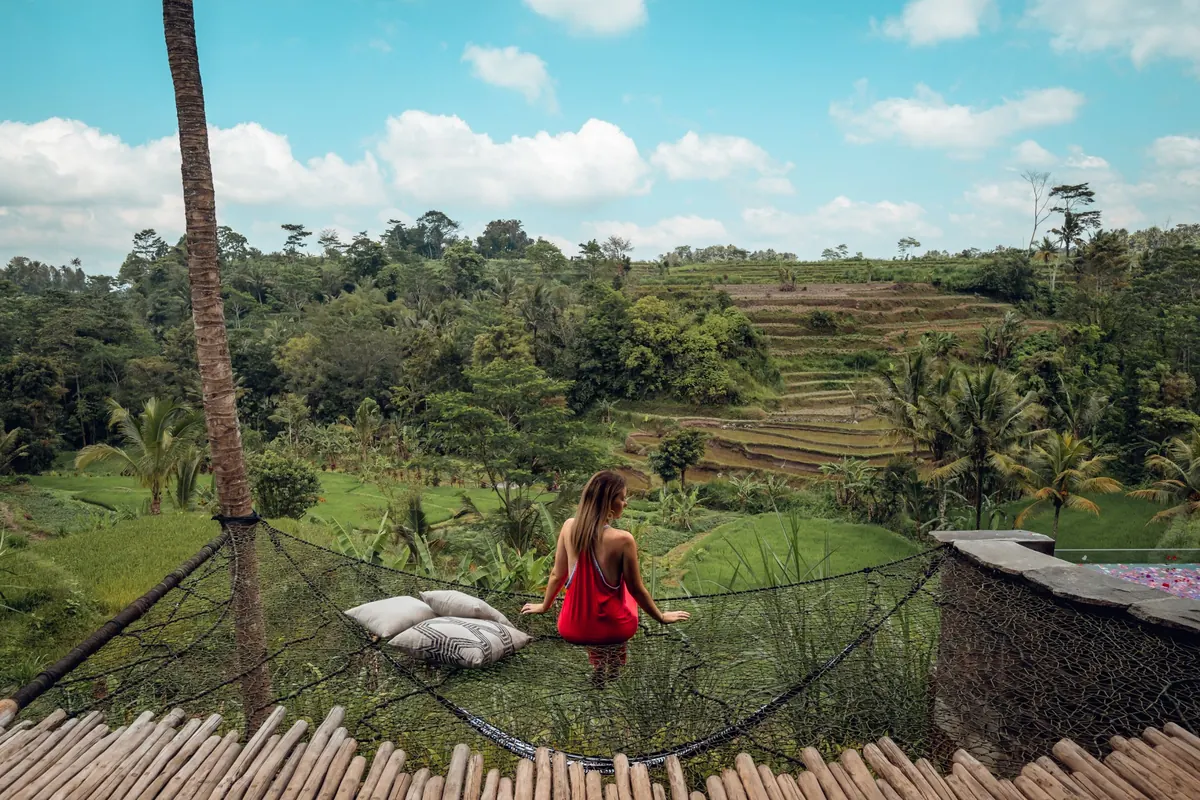
Bali has two seasons. Based on long-term data for Denpasar, the wetter season lasts about four and a half months, from around 11 November to 29 March, when more than a third of days bring measurable rain (Weather Spark). Many travel guides use a looser window of November to March or October to April (Lonely Planet; Smartraveller). In Karangasem, our regency in East Bali, the rainy season usually runs from November to April, with January and February the wettest months (Wikipedia: Karangasem Regency, citing BPS Karangasem).
Indonesia’s weather agency, BMKG, expects this season to start later than usual in Bali. Its Bali climatology station forecasts that only 3 of Bali’s 20 seasonal zones will enter the rainy season in late November 2026, and the other 17 during December. It expects the peak in February 2027 for most of the island, and rainfall that is normal or above normal, with the north and east coasts most likely to be above normal (BMKG Bali Climatology Station; reported by Bali Post). A seasonal forecast is a guide, not a promise, so check the daily forecast before you travel.
Bali is warm year-round, with the heaviest rain from December to February and the largest international crowds in July and August. The tables below use long-term weather averages for Denpasar and arrival figures for 2025.
Weather columns are long-term averages for Denpasar, in South Bali, from Weather Spark (1980 to 2016 data; rainfall converted from inches and rounded). Crowd figures are international arrivals to Bali in 2025 from BPS Bali, Indonesia’s statistics office, as compiled by the Bali Hotels Association. The crowd label is our own reading of those numbers.
Weather figures are long-term averages for Denpasar. “Rainy days” are days with at least 1 mm (0.04 in) of rain. “Cloudy sky” is the share of time the sky is mostly cloudy or overcast.
| Month | Rainfall | Rainy days | Avg high / low | Cloudy sky |
|---|---|---|---|---|
| January | 262 mm (10.3 in) | 18 | 31°C / 25°C (87°F / 77°F) | 88% |
| February | 234 mm (9.2 in) | 16 | 31°C / 25°C (87°F / 77°F) | 86% |
| March | 150 mm (5.9 in) | 13 | 31°C / 24°C (88°F / 76°F) | 80% |
| April | 89 mm (3.5 in) | 9 | 31°C / 24°C (88°F / 76°F) | 75% |
| May | 51 mm (2.0 in) | 6 | 31°C / 24°C (87°F / 76°F) | 65% |
| June | 36 mm (1.4 in) | 4 | 30°C / 24°C (86°F / 75°F) | 59% |
| July | 30 mm (1.2 in) | 4 | 29°C / 24°C (85°F / 75°F) | 54% |
| August | 15 mm (0.6 in) | 2 | 29°C / 23°C (85°F / 74°F) | 52% |
| September | 28 mm (1.1 in) | 3 | 31°C / 24°C (87°F / 75°F) | 59% |
| October | 56 mm (2.2 in) | 6 | 31°C / 24°C (88°F / 76°F) | 69% |
| November | 117 mm (4.6 in) | 11 | 32°C / 25°C (89°F / 77°F) | 81% |
| December | 211 mm (8.3 in) | 16 | 31°C / 25°C (87°F / 77°F) | 86% |
International arrivals below are to Bali in 2025, from BPS Bali as compiled by the Bali Hotels Association, rounded to the nearest thousand. The crowd label is our own reading of those numbers.
| Month | International arrivals 2025 | Crowds |
|---|---|---|
| January | 530,000 | Moderate |
| February | 451,000 | Quietest |
| March | 471,000 | Quiet |
| April | 591,000 | Moderate |
| May | 602,000 | Busy |
| June | 638,000 | Busy |
| July | 697,000 | Busiest |
| August | 683,000 | Busiest |
| September | 635,000 | Busy |
| October | 595,000 | Moderate |
| November | 483,000 | Quiet |
| December | 573,000 | Moderate, busy over the holidays |
“Rainy days” are days with at least 1 mm (0.04 in) of rain. “Cloudy sky” is the share of time the sky is mostly cloudy or overcast. Arrivals are rounded to the nearest thousand.
Two things the tables do not show. First, temperatures hardly change through the year, so the rainy season is not “cold”; it is warm and humid. Second, the hills are cooler than Denpasar.
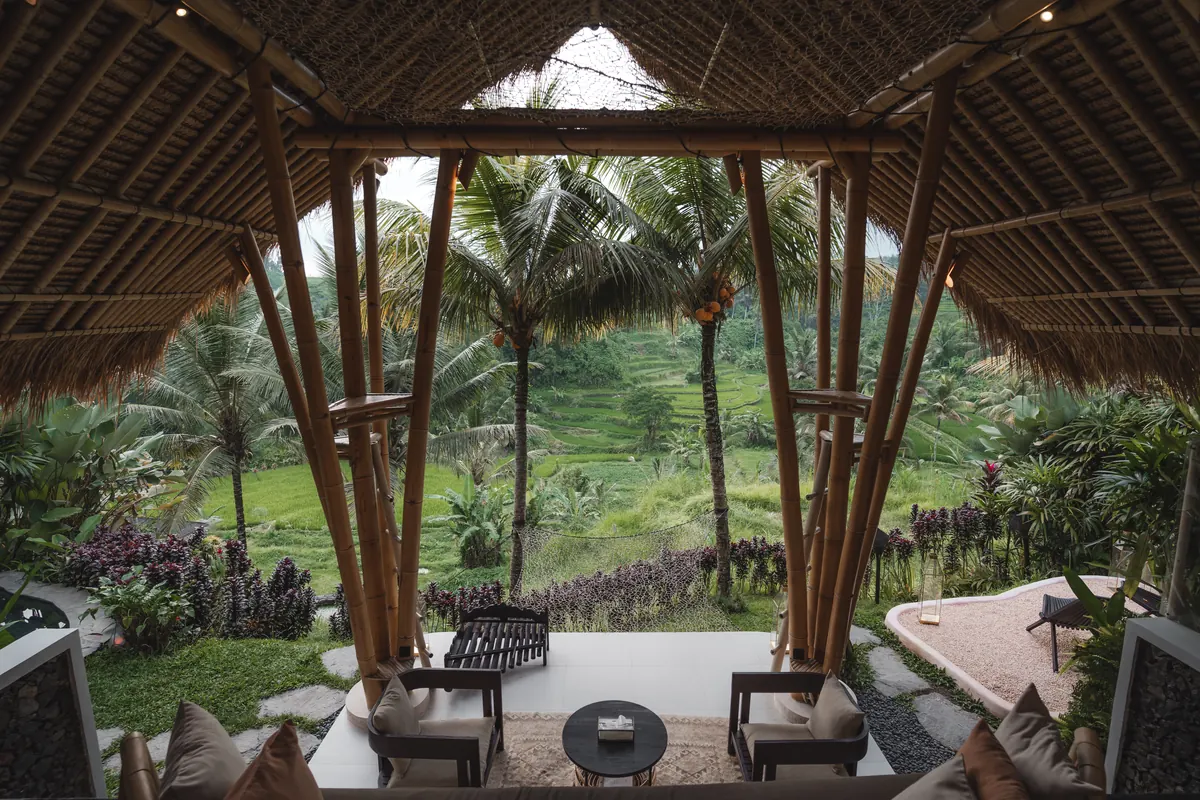

Rain in Bali’s wet season usually comes in bursts rather than all day. Lonely Planet’s advice for Indonesia is to “expect a few hours of rain, often in the afternoon, before blue skies reappear”, and to plan outdoor activities for the morning, when it is more likely to be clear (Lonely Planet). Its Bali guide adds that heavy showers are common but “don’t tend to last all day” (Lonely Planet).
What that means in practice:
Camaya tip: We plan guest days around the morning: walks, waterfalls and temples before lunch, then the spa, a long lunch at Camaya Terrace or a nap while the rain drums on the bamboo roof. Most guests tell us the afternoon storm over the rice fields is one of their favourite parts of the stay.
Here is how each month typically feels, using the Denpasar weather averages and 2025 arrival figures above. January is the wettest month on average, and July and August are the busiest.
The start of the wet season. Rain picks up through the month (117 mm and about 11 rainy days in Denpasar on average), and November had the fewest international arrivals of the second half of 2025 (483,000). It is also the hottest month by average high, around 32°C (Weather Spark). This year BMKG expects the rains to arrive late, with most of Bali starting in December. A good month for quieter temples and shorter queues, with dry spells still common.
Wetter (211 mm, about 16 rainy days) and busier at the end of the month: international arrivals rose from 483,000 in November to 573,000 in December 2025. Book Christmas and New Year early. BMKG expects most of Bali to enter the 2026/2027 rainy season during December. Plan sightseeing for mornings and keep afternoons flexible.
On average the wettest month in Denpasar (262 mm, about 18 rainy days) and the cloudiest (Weather Spark). Arrivals were moderate in 2025 (530,000). Expect warm, humid days, frequent heavy showers and green landscapes. Good for spa time and slow days; less good for volcano treks.
The quietest month for international arrivals in 2025 (451,000) and still very wet (234 mm, about 16 rainy days). BMKG expects the 2026/2027 rainy season to peak in February 2027 across most of Bali. If you want Bali at its calmest and do not mind rain, this is the month. February is also one of our quietest months at Camaya, so it is usually easier to find a free house.
Rain eases (150 mm, about 13 rainy days) and arrivals stay low (471,000 in 2025). Note the dates: Nyepi, Bali’s Day of Silence, falls on Monday 8 March 2027 (timeanddate). In recent years the airport, ports and roads have closed for 24 hours from 6:00 AM, and everyone stays inside their accommodation (SmartBali). The evening before brings the ogoh-ogoh parades. Eid al-Fitr public holidays are expected on 10 and 11 March 2027, so roads and ferries may be busy around them (SmartBali, subject to official confirmation). Do not book a flight in or out on 8 March.
The shoulder month. Rain drops to about 89 mm and 9 rainy days, and skies start to clear. Arrivals rose to 591,000 in April 2025, and domestic arrivals also peaked that month in 2025 (BHA figures). Mount Agung often closes for weeks around the big Besakih ceremonies in March or April; in 2026 it closed from 28 March to 24 April (Discover Indonesia).
May to October is the dry season: under 60 mm of rain a month and 2 to 6 rainy days in Denpasar, with August the driest and clearest month (Weather Spark). It is also when Bali is busiest, with July (697,000) and August (683,000) the peak months for international arrivals in 2025. May, June, September and October give a good balance of dry weather and smaller crowds.
Plenty of the best things in Bali do not need sunshine: spas, workshops, temples and long lunches all work on a wet afternoon. Save volcano treks and boat trips for a clearer day.
What to postpone: summit treks. Lonely Planet notes that most of Indonesia’s volcanoes are off-limits from December to March (Lonely Planet), and Mount Agung guides advise against November to March because of wet rock and cloud (Discover Indonesia). Boat trips can also be cancelled in rough weather (Smartraveller).
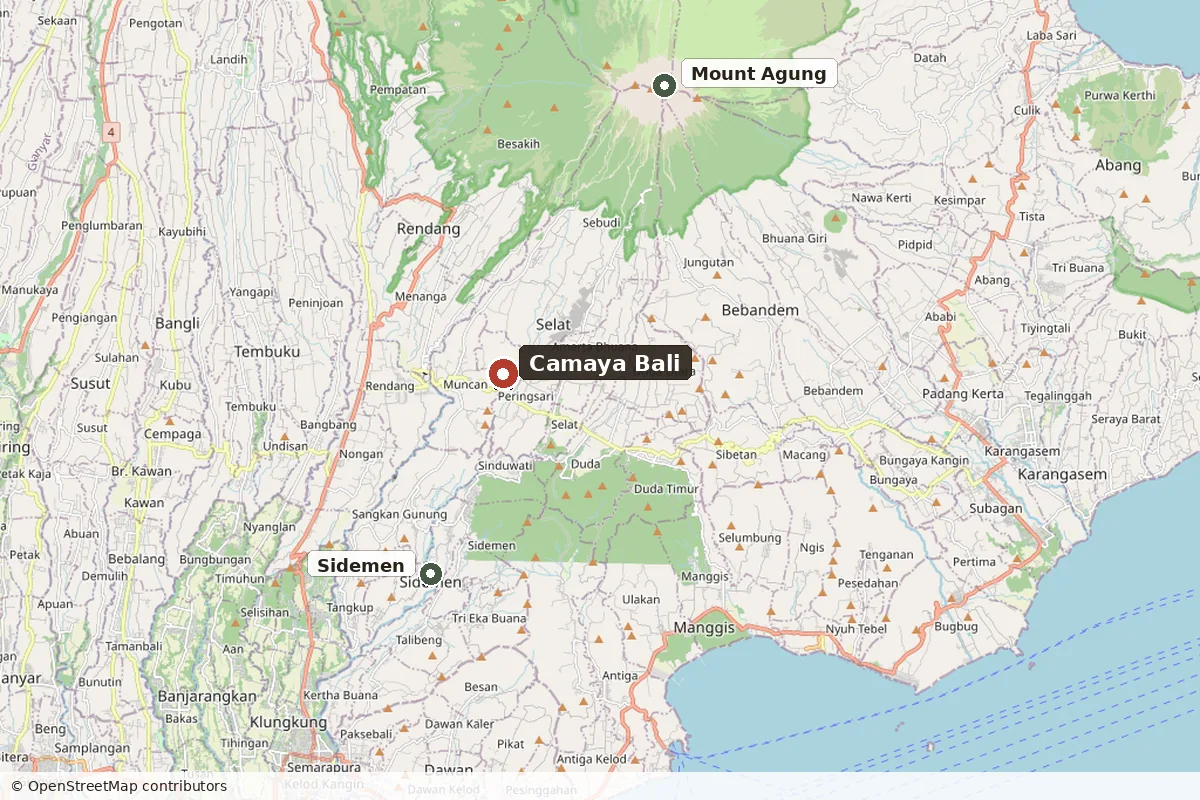
East Bali is a good wet-season base if you like green landscapes and do not need a beach every day. Our regency, Karangasem, usually gets 1,000 to 1,700 mm of rain a year, with January and February the wettest months at over 200 mm each (Wikipedia: Karangasem Regency, citing BPS Karangasem). Lonely Planet points out that you can still enjoy the outdoors in the wet season, “especially in drier areas in the east and north of the island” (Lonely Planet). This season, though, BMKG expects above-normal rain on parts of the north and east coasts, so pack for showers either way.
What changes in the wet season in East Bali:
Camaya tip: If you want the Lempuyang “Gates of Heaven” view in the wet season, go on your first clear morning rather than a fixed date, and go early. Our team watches the weather and can rearrange a day trip at short notice.
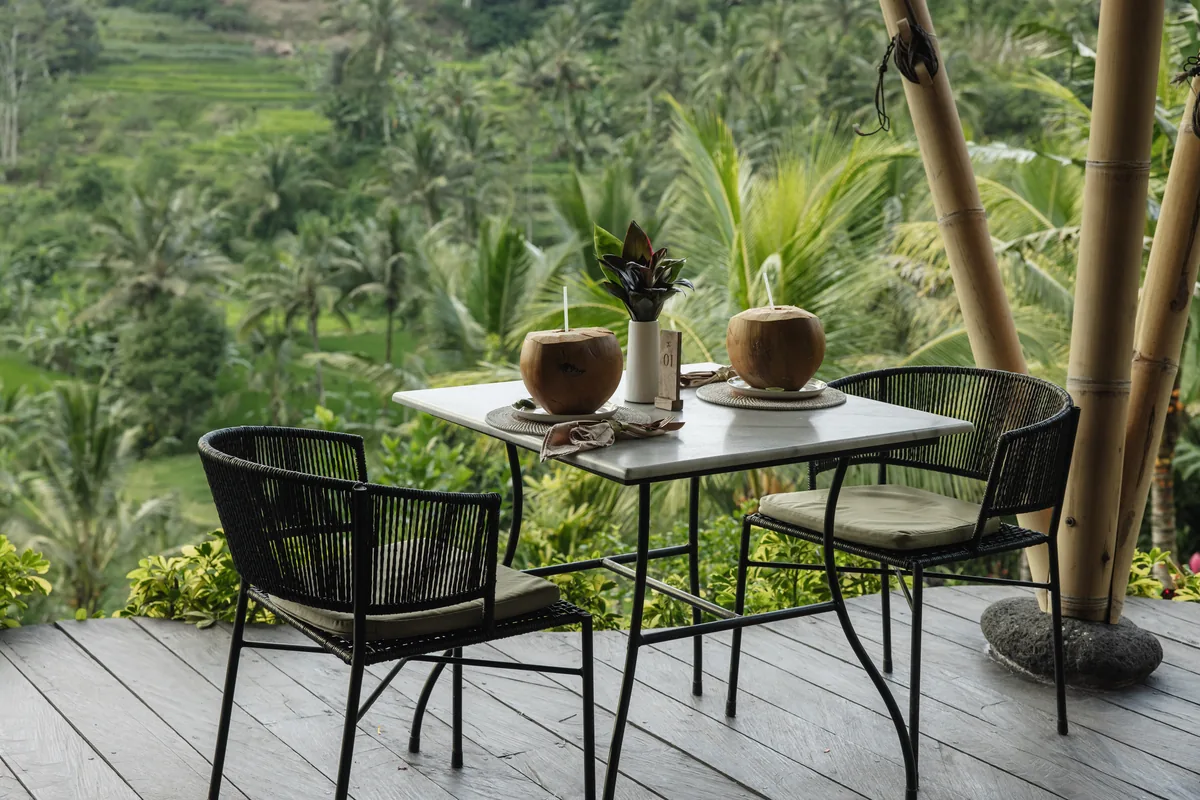
Yes. February and March are our quietest months at Camaya, and the island as a whole is calmer (see the arrivals table above). Lonely Planet calls the low season the cheapest time to visit Bali, with “a more relaxed vibe” (Lonely Planet).
At Camaya, seven open-air bamboo houses and one Balinese cottage look over the rice fields in Padangaji, Selat, East Bali. In the wet season that means:
Please read this before you book. Our houses are open-air and have no air conditioning; they have fans and mosquito nets over the beds, and nights in the valley are naturally cool. Being open to nature, you may meet insects, geckos, small lizards and sometimes snakes, and in the wet season you will hear and feel the rain. The open sides of the houses can be closed with curtains. Guests must be 12 or older. Check-in is from 3:00 PM and check-out is by 12:00 PM.
Pack a light rain jacket, shoes with grip and insect repellent, and plan outdoor sightseeing for the morning. The list below is what we tell our own guests.
April is usually drier. Denpasar averages about 117 mm of rain over 11 rainy days in November, and about 89 mm over 9 rainy days in April (Weather Spark). Arrivals were also higher in April 2025 than in November. If you want greener terraces and fewer people, November is quieter. If you want a better chance of clearer skies, April is the safer shoulder month.
They can be. Australia’s travel advice notes that conditions can change quickly and that boat trips can be cancelled in rough weather (Smartraveller). Leave slack in your plans for transfers, flights and boats, and check the BMKG forecast before you set out.
Yes. December averages about 211 mm of rain over 16 rainy days in Denpasar, and international arrivals rose from 483,000 in November 2025 to 573,000 in December. Book Christmas and New Year early, and plan sightseeing for the mornings.
Yes, if you do not mind rain. February was the quietest month for international arrivals in 2025 (451,000) and is still very wet (234 mm, about 16 rainy days in Denpasar). It is also one of our quietest months at Camaya. BMKG expects the 2026/2027 rainy season to peak in February 2027.
Nyepi, the Balinese Day of Silence, is on Monday 8 March 2027. In recent years the airport, ports and roads have closed for 24 hours from 6:00 AM, and visitors stay inside their accommodation. Do not book a flight in or out on 8 March.
Yes. The open sides of the houses can be closed with curtains. The houses still have no air conditioning: they use fans and mosquito nets, and nights in the valley are naturally cool. You will hear the rain and may see geckos and insects. If you need a closed, air-conditioned room, choose a different style of stay.