

What you will really share an open-air house with, and how to sleep well anyway.
Updated November 2026
Yes, in an open-air house in Bali you will see geckos and insects, and now and then a snake. Geckos are harmless and eat insects. Most snakes avoid people, and bites are rare, but a few Bali species are dangerous, so never touch or chase one. Mosquitoes are the animal to take seriously, because they can spread dengue: use repellent, and sleep under the mosquito net we hang over every bed.
Key facts
On this page
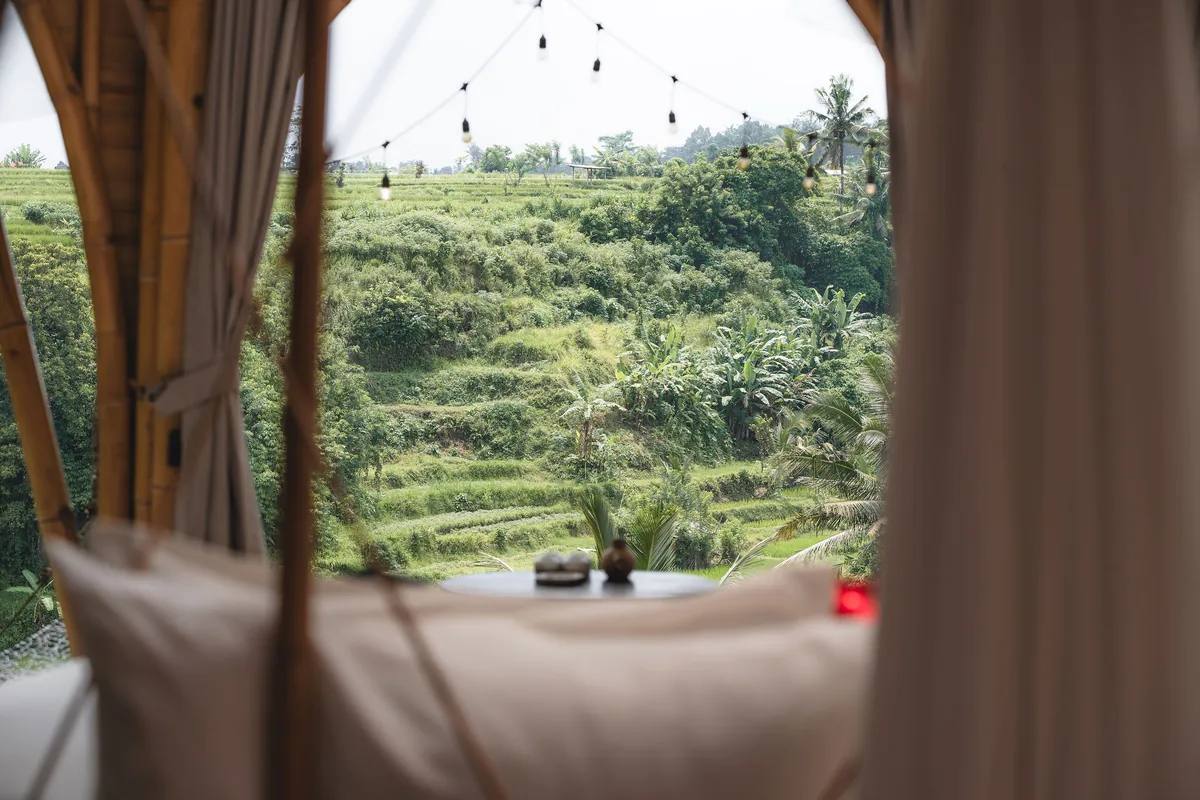
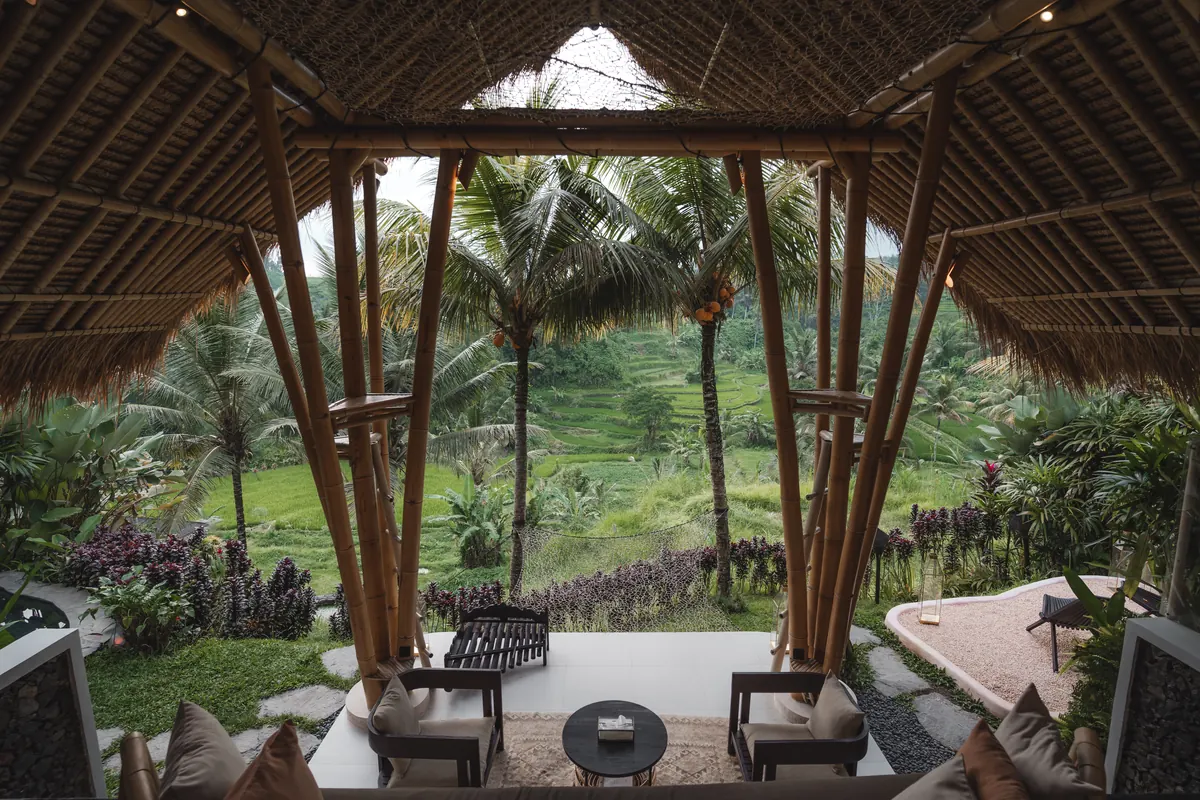
In an open-air house in Bali you will see geckos and insects, and now and then a snake. Our houses are semi-open to the rice fields, and there is no air conditioning. This is what we write on every house page, and we stand by it:
> “Living in semi-open houses surrounded by nature means you may encounter insects, ants, small lizards, geckos, mosquitoes, and sometimes snakes. If you are uncomfortable with open-air living or being close to nature, Camaya might not be the right fit, we kindly suggest considering a different style of accommodation.”
In practice, that means geckos on the walls and roof in the evening, moths and other insects around the lights after dark, ants if food is left out, and birdsong from the fields. Snakes are the rare one.
No. Geckos in Bali are not dangerous if you leave them alone. You will meet two main kinds.
The small house gecko (cicak). The common house gecko grows to about 7.5 to 15 cm, is active at night, and hunts insects drawn to lights. It is non-venomous and not harmful to people, and you will know it by its chirping (Wikipedia: Common house gecko). Having a few around helps keep the insects down.
The tokay gecko (tokek). A much bigger gecko that lives in Indonesia, including Bali (Reptile Database). It eats moths, cockroaches, crickets, mosquitoes and other insects, and often lives close to people for exactly that reason. Males make the loud “to-kay” call you may hear at night. A tokay will usually flee, but if it is grabbed or cornered it can give a strong bite (Smithsonian’s National Zoo). So enjoy it from a distance, and never try to catch one.
Mostly ants, moths, mosquitoes and other small insects, the same kinds you find anywhere warm and green. After dark, insects gather around lights, which is also where the geckos come to hunt them (Wikipedia: Common house gecko).
Around Camaya, our valley has fewer mosquitoes than many other parts of Bali. The water here comes from fresh springs, which mosquitoes do not favour for breeding. You may still meet insects during your stay, especially in the evening.
Take mosquitoes in Bali seriously, without panicking, because they can spread dengue. The US CDC lists dengue as a risk in Indonesia, spread by mosquito bites, and in August 2026 it also issued a notice about Zika cases in travellers returning from Bali (CDC). The mosquitoes that spread dengue bite most at dawn and dusk (CDC Yellow Book), and the risk rises in the rainy season (CDC Yellow Book: Dengue).
The CDC’s advice for Indonesia:
The CDC also suggests talking to a doctor about the Japanese encephalitis vaccine if you will spend time in rural areas or stay somewhere without air conditioning, screens or bed nets (CDC). See a travel clinic before your trip.
Yes, there are snakes all over Bali, including in towns. Encounters are still uncommon, and bites are rarer. Bali snake specialist Ron Lilley says there are nearly 50 kinds of land snakes on the island and only 6 or 7 of them are a potential danger to people. In his words, snakes “generally want to avoid people”, and most bites happen to local farmers and gardeners (Our Year in Bali interview).
Snakes are more active in the rainy season, when they come out to feed and mate after the dry months (Indonesia Expat).
You cannot identify a snake safely by colour alone. Several dangerous species come in many colours and look like harmless ones. Treat every snake as dangerous and leave it alone.
| Snake | Dangerous? | What to know |
|---|---|---|
| Island pit viper (Trimeresurus insularis) | Yes, venomous | Green with a red or brown tail and a wide head. It causes most bites in Bali, usually when someone steps on it in the dark (Our Year in Bali; Balipedia) |
| Spitting cobra (Naja sputatrix) | Yes, venomous | Light cream to dark brown or olive. It can spray venom 1.5 to 2 metres (Balipedia). If venom reaches the eyes, rinse with running water for 30 minutes and do not rub (Indonesia Expat) |
| Blue krait or Malayan krait (Bungarus candidus) | Yes, Bali’s most venomous snake | Not blue. It can be banded black and white, or one plain colour (Balipedia) |
| Banded krait (Bungarus fasciatus) | Yes, venomous | Black and yellow or white bands; rarer than the blue krait in Bali (Balipedia) |
| King cobra and Asian coral snake | Yes, venomous | Both on Ron Lilley’s list of Bali’s highly venomous land snakes (Indonesia Expat) |
| Pythons | Not venomous | Found even in Sanur and Ubud. Large ones can be a threat if disturbed, and their bites are painful (Indonesia Expat) |
| Most other snakes | Harmless to people | Many help by eating rats |
Stop, step back and give it space. Never try to catch, move or kill a snake.
If someone is bitten by a snake, follow the World Health Organization’s first aid advice (WHO):
At Camaya, tell our team straight away.
Treat dogs and monkeys in Bali with caution. The CDC reports that dogs with rabies are commonly found in Indonesia, and advises travellers not to touch or feed animals they do not know. If any animal bites or scratches you, wash the wound with soap and clean water and see a doctor straight away (CDC). This matters most around village dogs and the monkeys at temples and the Ubud Monkey Forest.
Camaya provides a mosquito net over every bed, fans instead of air conditioning, and paths that are lit at night. Other measures still need confirming.
From our house pages and FAQ:
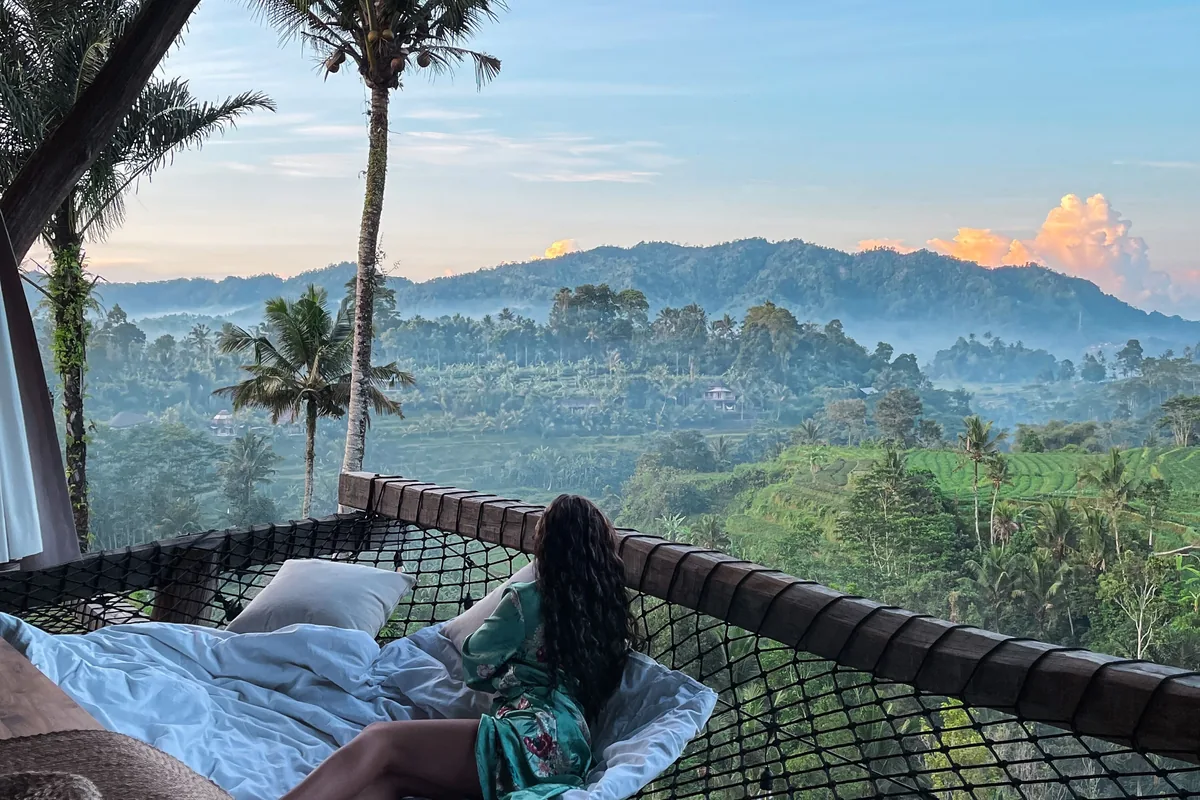
The most important habit is to tuck the mosquito net in before dusk and keep it closed while you sleep.
An open-air stay at Camaya is right for you if you like waking to birdsong and rice fields, and you are comfortable sharing the house with geckos and insects. If a closed, air-conditioned room matters more, choose a different style of stay.
It probably is if:
It probably is not if:
If that second list sounds like you, a hotel with enclosed, air-conditioned rooms will suit you better, and we would rather tell you now. Our where to stay in Bali guide compares the areas. If the first list sounds like you, have a look at our houses: Sayang, Santai, Nirvana and the two-bedroom houses such as Butterfly, or compare all eight.
Planning the rest of your trip? See our Sidemen guide, East Bali guide and the FAQ.
A tokay gecko. Males call to attract a mate. It is loud, but it is a sign of a healthy, insect-eating neighbour.
According to Bali snake rescuer Ron Lilley, the blue krait (Malayan krait) is the most venomous, and the island pit viper causes the most bites, usually when people step on it in the dark.
No. Our houses have fans and a mosquito net over every bed, and nights in the valley are naturally cool. If you need a closed, air-conditioned room, Camaya is not the right stay.
Probably, yes. Our houses are open to nature, so insects, ants, small lizards and geckos are part of the stay. If that would make you uncomfortable, we kindly suggest a different style of accommodation.
You do not need to. We hang a mosquito net over every bed. Do bring a repellent you already know works for you, especially if you are travelling in the rainy season.
Stop, step back and give it space. Never try to catch, move or kill it. Tell our team straight away.