
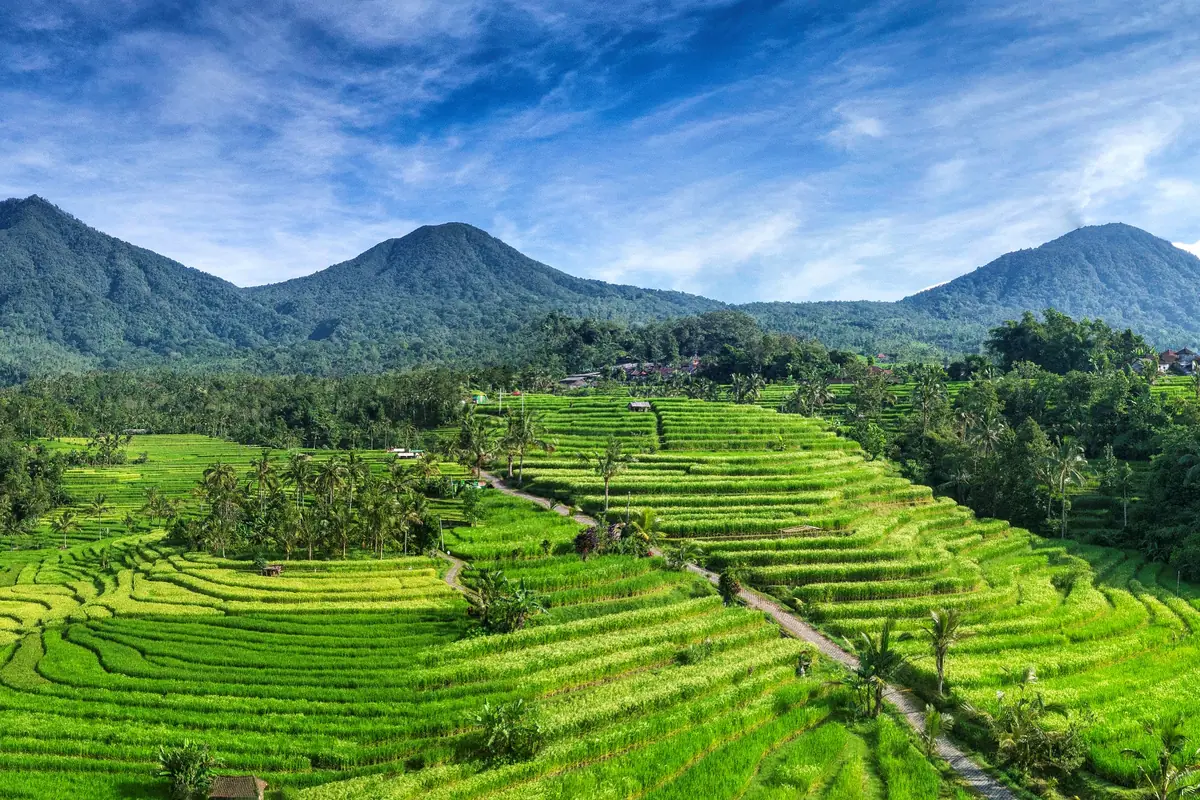
Month-by-month rain, temperature, crowds, room prices and 2027 festival dates, from our team in East Bali.
Quick answer: The best time to visit Bali is May, June or September: it's the dry season, with sunny days and low humidity, but without the July and August crowds. April and October are good shoulder months. July and August have the best weather and the biggest crowds. The wet season, from November to March, brings short, heavy afternoon showers, the greenest rice fields, the fewest visitors (February is the quietest month) and lower prices. Avoid flying in or out on Nyepi, 8 March 2027, when the airport closes for 24 hours.
At a glance
Bali is 8 degrees south of the equator, so it's warm all year (highs of 29 to 32 °C) and has two seasons rather than four:
Rain rarely lasts all day, even in January. Most wet-season days have a dry morning and a downpour later. The bigger difference between the seasons is cloud: the sky is cloudy about 88% of the time in January against about 52% in August, so volcano views and sunsets are much less reliable in the wet months.
2026-27 outlook: Indonesia's weather agency, BMKG, expects the rainy season to start late (most of Bali from December 2026), peak in February 2027 and last until about April 2027. More in our rainy season guide.
| Month | Rain (mm) | Rainy days | High / low (°C) | Sea (°C) | Visitors (2025) | Crowds | Our rating |
|---|---|---|---|---|---|---|---|
| January | 262 | 18 | 31 / 25 | 29 | 530,000 | Moderate | ★★☆☆☆ |
| February | 234 | 16 | 31 / 25 | 29 | 451,000 | Quietest | ★★☆☆☆ |
| March | 150 | 13 | 31 / 24 | 29 | 471,000 | Quiet | ★★★☆☆ |
| April | 89 | 9 | 31 / 24 | 28 | 591,000 | Moderate | ★★★★☆ |
| May | 51 | 6 | 31 / 24 | 28 | 602,000 | Busy | ★★★★★ |
| June | 36 | 4 | 30 / 24 | 27 | 638,000 | Busy | ★★★★★ |
| July | 30 | 4 | 29 / 24 | 26 | 697,000 | Busiest | ★★★★☆ |
| August | 15 | 2 | 29 / 23 | 26 | 683,000 | Busiest | ★★★★☆ |
| September | 28 | 3 | 31 / 24 | 26 | 635,000 | Busy | ★★★★★ |
| October | 56 | 6 | 31 / 24 | 27 | 595,000 | Moderate | ★★★★☆ |
| November | 117 | 11 | 32 / 25 | 28 | 483,000 | Quiet | ★★★☆☆ |
| December | 211 | 16 | 31 / 25 | 29 | 573,000 | Moderate, busy at Christmas | ★★★☆☆ |
About these figures: rain and temperature are long-term averages for Denpasar (1980 to 2016, Weather Spark). A "rainy day" means at least 1 mm. Sea temperatures are from weather2travel. Visitor numbers are international arrivals in 2025 from BPS Bali. The hills, including Ubud, Sidemen and Munduk, are cooler and usually wetter and cloudier than Denpasar. The rating is ours: weather, crowds and value together.
Weather: the wettest and cloudiest month, with about 262 mm of rain over 18 rainy days. Highs of 31 °C, lows of 25 °C, sea 29 °C.
Crowds: moderate (about 530,000 visitors in 2025), busy in the first week after New Year, then quiet.
What's on: Galungan on 13 January 2027 and Kuningan on 23 January: bamboo poles (penjor) arch over every village road and temples fill with offerings.
Good for: spa days, cooking and silver classes, Galungan, greener-than-green rice fields.
Not good for: volcano treks, boat trips to the Nusa islands, west-coast beaches (rubbish washes up).
Our verdict: go for culture and quiet, not for the beach.
Weather: still very wet, about 234 mm over 16 rainy days. BMKG expects the 2026-27 season to peak in February 2027.
Crowds: the quietest month of the year (about 451,000 visitors). Chinese New Year falls on 6 February 2027 and brings more visitors from Asia for a few days.
Good for: the lowest prices and the emptiest temples. Great for a slow, romantic stay where rain is part of the mood.
Not good for: guaranteed sunshine or sea crossings.
Our verdict: the best month for value, if you don't mind rain.
Weather: the rain eases, to about 150 mm over 13 rainy days.
Crowds: quiet (about 471,000 visitors), except around two big holidays.
What's on: the ogoh-ogoh parades on the evening of 7 March 2027, when giant demon figures are carried through every village, and Nyepi, the Day of Silence, on 8 March: the whole island, including the airport, shuts for 24 hours from 6 AM, and everyone stays inside their hotel. Eid (Idul Fitri) follows on 10 and 11 March 2027, with extra national leave days, so expect busy roads, ports and flights from about 6 to 15 March.
Our verdict: a quiet, good-value month, and Nyepi is a once-in-a-lifetime experience if you plan for it.
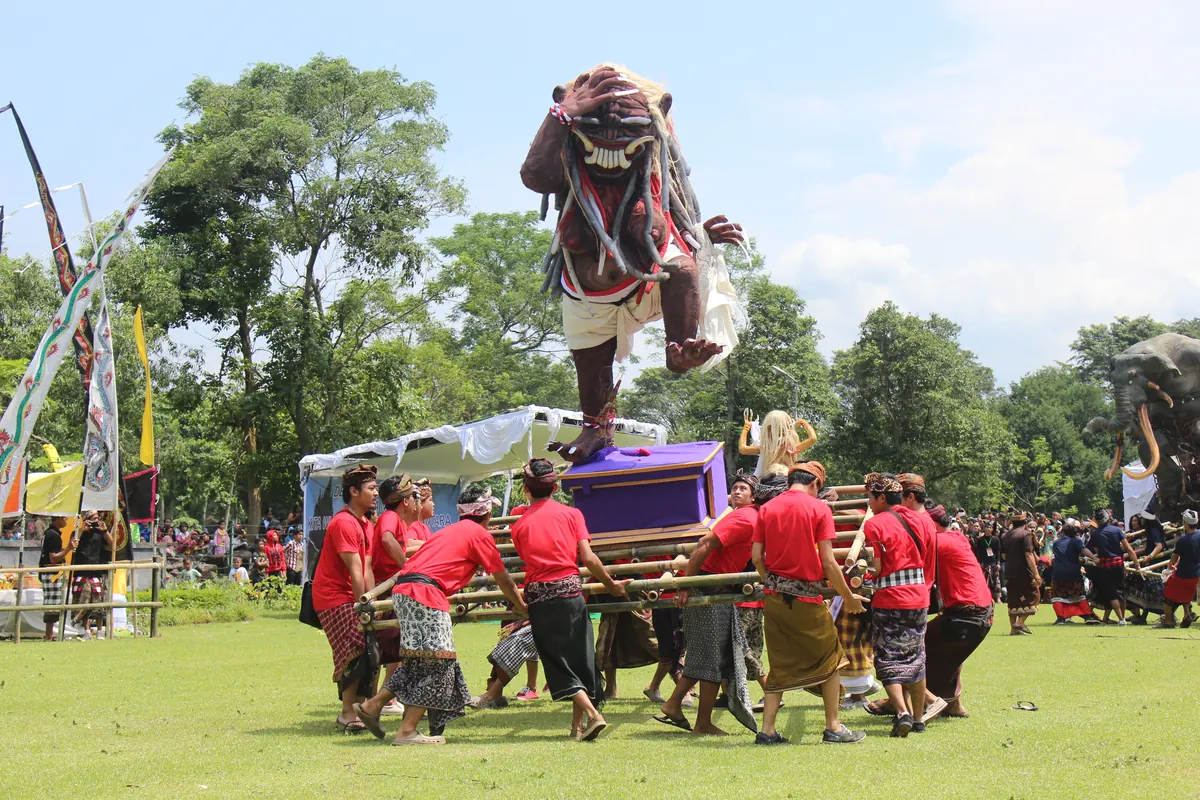
An ogoh-ogoh figure carried through the streets on the eve of Nyepi. Photo: FaizAttariqi, CC BY-SA 4.0, via Wikimedia Commons
Weather: a turning point: about 89 mm over 9 rainy days, and the skies clear. In the hills and the east, showers can continue all month.
Crowds: moderate (about 591,000 visitors). Australian school holidays bring a short rush in April.
Watch out: Mount Agung often closes for temple ceremonies around this time (in 2026 it was closed from 28 March to 24 April).
Our verdict: a great shoulder month: green, fresher and not yet busy.
Weather: the dry season settles in: about 51 mm over 6 rainy days, lower humidity, highs of 31 °C.
Crowds: busier (about 602,000 visitors) but well below July and August.
What's on: Saraswati, the day of knowledge, on 29 May 2027.
Our verdict: one of the best months of the year. Sunny, green and still easy to book.
Weather: dry and sunny, about 36 mm over 4 rainy days. Highs of 30 °C and cooler nights (24 °C); the sea cools to about 27 °C.
Crowds: busy (about 638,000 visitors), rising towards July as school holidays begin in Australia and Europe.
What's on: the Bali Arts Festival (Pesta Kesenian Bali), a month of dance, music and crafts at the Taman Budaya Art Centre in Denpasar, usually from mid-June to mid-July. Free to watch.
Our verdict: close to perfect: dry, clear and not yet at the peak.
Weather: among the driest and coolest months: about 30 mm over 4 rainy days, highs of 29 °C, sea 26 °C. Cool, breezy evenings, especially in the hills.
Crowds: the busiest month (about 697,000 visitors in 2025). Book flights, hotels, drivers and popular restaurants early.
What's on: the Bali Arts Festival continues, and kite season begins: giant traditional kites fly over the fields and beaches around Sanur.
Our verdict: the best weather, but the biggest crowds and the highest prices.
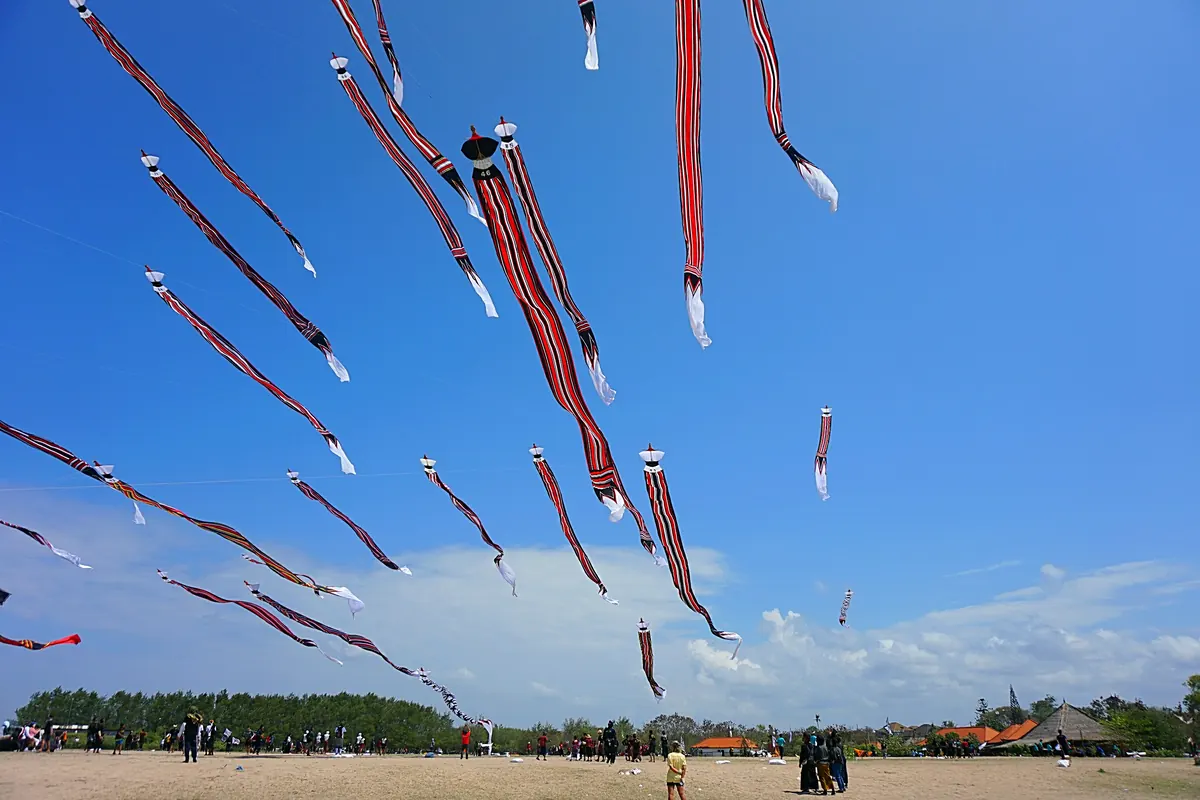
Traditional kites at the kite festival on Mertasari beach, Sanur. Photo: Johannnindito Adisuryo, CC BY-SA 4.0, via Wikimedia Commons
Weather: the driest and clearest month: about 15 mm over 2 rainy days, with cloud only about half the time. Lows of about 23 °C, the coolest nights of the year.
Crowds: very busy (about 683,000 visitors).
What's on: Galungan returns on 11 August 2027, with Kuningan on 21 August, and Indonesia's Independence Day on 17 August brings flags, parades and village games. Kite season continues.
Our verdict: perfect weather and a beautiful time for Balinese culture in 2027, but book everything early.
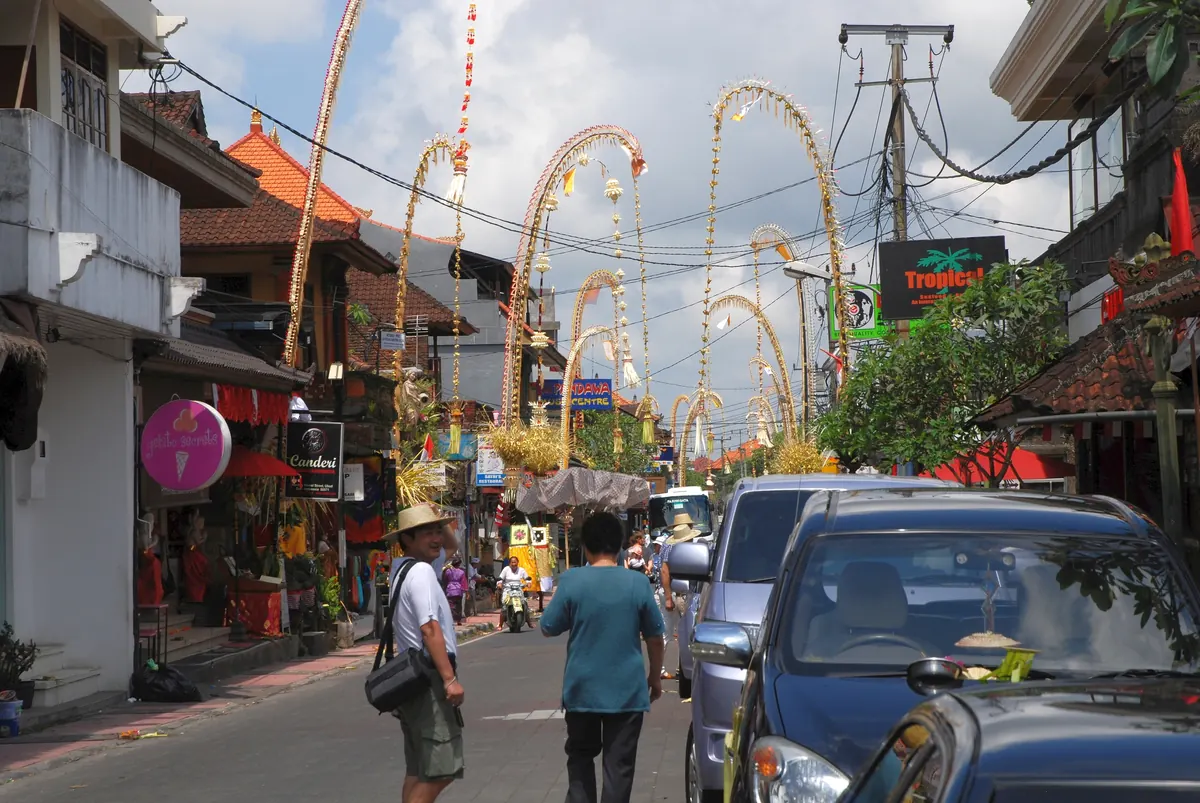
Penjor bamboo poles lining a street in Ubud during Galungan. Photo: Tigerente, CC BY-SA 4.0, via Wikimedia Commons
Weather: still dry, about 28 mm over 3 rainy days, and warming up again (highs of 31 °C). The sea is at its coolest, about 26 °C.
Crowds: busy at first, easing after the European holidays end (about 635,000 visitors).
Good for: diving: visibility is usually at its best from August to November, and mola mola (ocean sunfish) appear around Nusa Penida from about July to October.
Our verdict: one of the best months: dry weather with fewer people.
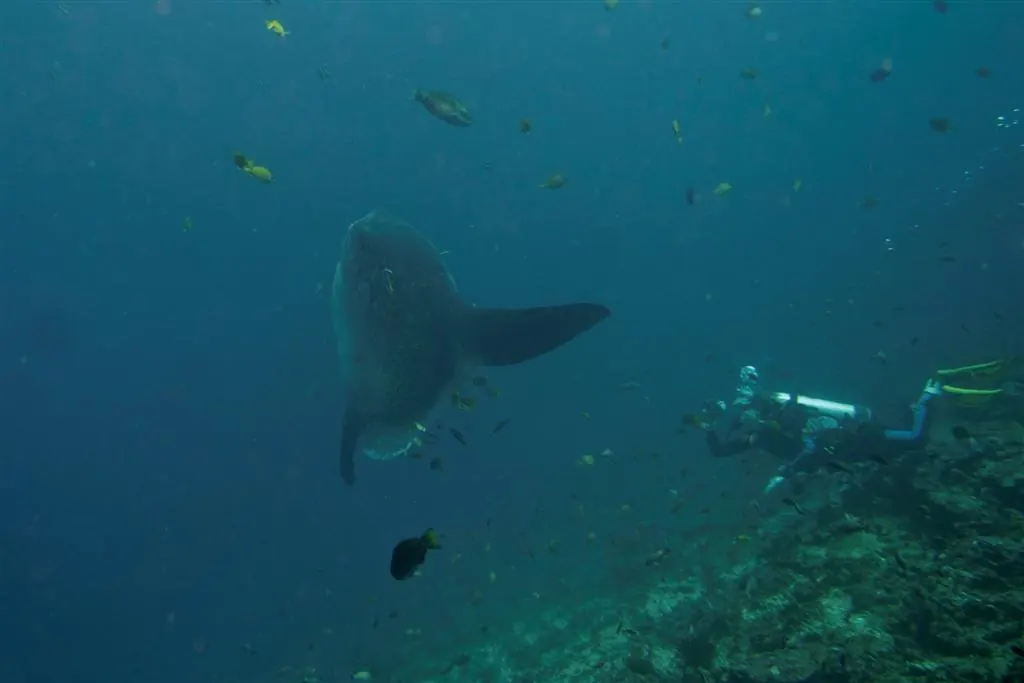
A diver with a mola mola (ocean sunfish) at Crystal Bay, Nusa Penida. Photo: Andrepiazza, CC BY-SA 3.0, via Wikimedia Commons
Weather: mostly dry, about 56 mm over 6 rainy days, with the first humid, cloudy afternoons.
Crowds: moderate (about 595,000 visitors), with a short rush during Australian school holidays at the start of the month.
What's on: the Ubud Writers & Readers Festival, usually in late October.
Our verdict: a very good shoulder month.
Weather: the hottest month, with highs of about 32 °C, and the rain returns: about 117 mm over 11 rainy days. In 2026, BMKG expects most of Bali's rainy season to start late, so November may stay drier than average.
Crowds: one of the quietest months (about 483,000 visitors).
Our verdict: good value and quiet, with a mix of sun and storms.
Weather: wet, about 211 mm over 16 rainy days, and warm, with the sea at 29 °C.
Crowds: quiet in early December, then the busiest and most expensive fortnight of the year from about 20 December to early January.
Watch out: rubbish washes onto the south-west beaches (Kuta to Seminyak) from about December to March.
Our verdict: come early in the month for quiet, or book months ahead for Christmas and New Year.
| Activity | Best months | Why |
|---|---|---|
| Beach holiday | May to October | Dry, sunny, calmer seas on the west coast; no monsoon rubbish |
| Surfing, west coast (Uluwatu, Canggu) | April to October | Offshore winds and bigger swells in the dry season |
| Surfing, east coast (Sanur, Keramas) | November to March | The wind turns offshore on the east coast in the wet season |
| Diving and snorkelling | April to November | Best visibility from about August to November; Amed and Tulamben dive all year |
| Mola mola at Nusa Penida | about July to October | When cold water rises around the island |
| Manta rays | all year | Nusa Penida and Lembongan |
| Mount Batur sunrise trek | April to October | Clearest summit views; treks run all year |
| Mount Agung climb | May to October | Safer underfoot when dry; check for ceremony closures |
| Rice terraces at their greenest | December to April | Fields are flooded and growing in the wet season |
| Waterfalls at full flow | December to April | Go early; paths are slippery |
| Culture and festivals | Galungan (January and August 2027), Nyepi (March), Arts Festival (June to July) | See the festival section below |
| Yoga and wellness retreats | all year | Rainy afternoons suit spa days |
| Lowest prices | February, March, November | Fewest visitors |
| Honeymoon | May, June, September | Good weather without peak crowds |
| Families | June to August | School holidays and dry weather; book early |
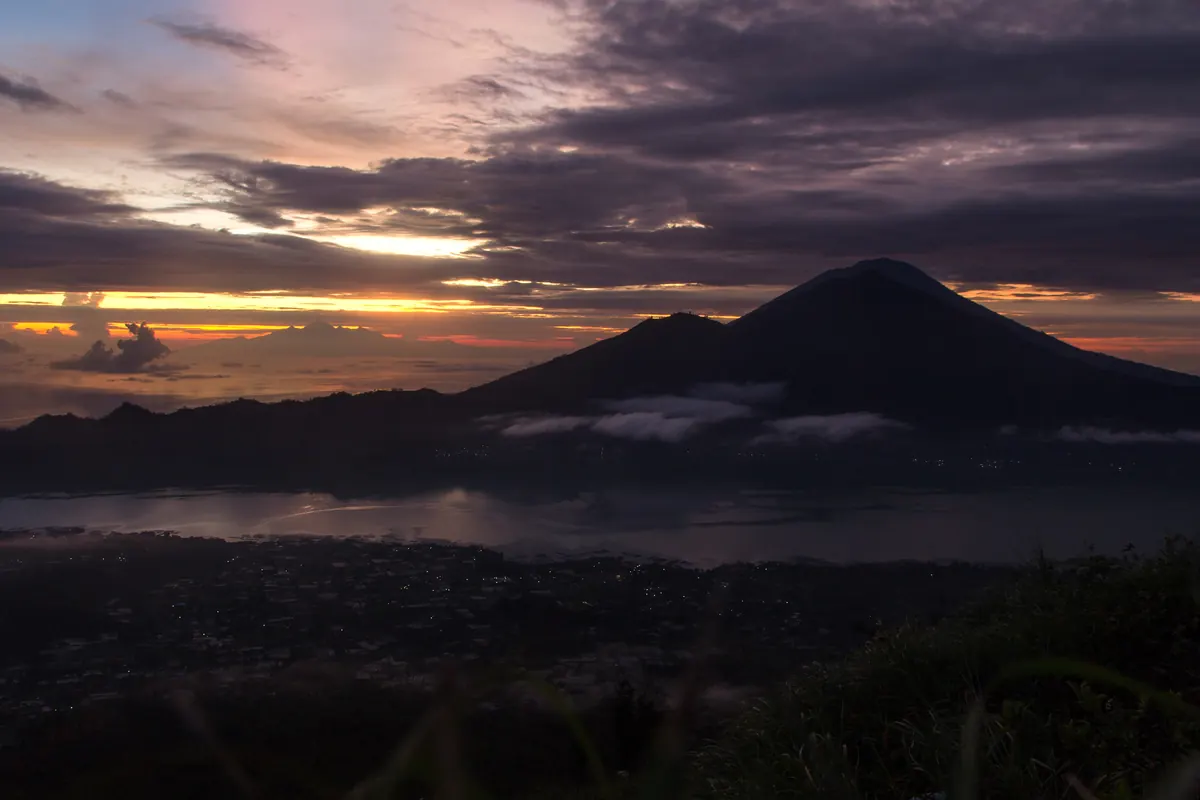
Sunrise over Mount Agung from the summit of Mount Batur. Photo: Alexey Komarov, CC BY 3.0, via Wikimedia Commons
February, March and November are usually the cheapest months, and the week around Christmas and New Year is the most expensive.
We checked Booking.com on 18 November 2026 for a Tuesday night in February 2027 and a Tuesday in August 2027 (one room, two adults, first 20 results per area). The middle price was:
| Area | February 2027 | August 2027 | Difference |
|---|---|---|---|
| Canggu | USD 71 | USD 94 | +32% |
| Jimbaran | USD 58 | USD 75 | +29% |
| Uluwatu | USD 73 | USD 93 | +27% |
| Ubud | USD 88 | USD 107 | +22% |
| Sidemen | USD 100 | USD 112 | +12% |
| Sanur | USD 77 | USD 77 | 0% |
| Nusa Dua | USD 107 | USD 108 | +1% |
The jump is biggest in the popular south-west and in Ubud, and smallest in quieter areas. Flights matter more than rooms: fares rise sharply around school holidays in Australia and Europe, so compare a few dates before you book. Full area-by-area prices are in our where to stay in Bali guide.
| Date | Event | What it means for you |
|---|---|---|
| 13 January | Galungan | Penjor along every road, busy temples, many Balinese go home to their villages |
| 23 January | Kuningan | End of the Galungan period |
| 6 February | Chinese New Year | More visitors from Asia for a few days |
| 7 March (evening) | Ogoh-ogoh parades | Giant demon figures paraded through every village. Worth seeing. |
| 8 March | Nyepi, the Day of Silence | The whole island, including the airport, closes for 24 hours from 6 AM |
| 10 and 11 March | Eid (Idul Fitri) | National holiday with extra leave days; busy roads, ports and flights |
| 29 May | Saraswati | Day of knowledge; offerings to books and schools |
| mid-June to mid-July (dates to be confirmed) | Bali Arts Festival | Free nightly dance and music in Denpasar |
| July to August | Kite season | Giant kites over Sanur and the fields |
| 11 August | Galungan | The second Galungan of 2027 |
| 17 August | Independence Day | Flags, parades and village games |
| 21 August | Kuningan | End of the Galungan period |
| late October (dates to be confirmed) | Ubud Writers & Readers Festival | Ubud gets busy |
| 24 December to early January | Christmas and New Year | The busiest and most expensive dates of the year |
Good to know
Balinese ceremonies happen almost every day somewhere on the island, and roads can close for an hour for a procession. If you get stuck behind one, enjoy it: it's one of the best things you'll see.
East Bali is where we live, so this is the question our guests ask most. Our honest answer:
In the wet season, our open-air houses become something special: rain on the bamboo roof, mist rolling up the valley, a hot jacuzzi on the terrace and a fire in the evening. Read more about East Bali in the wet season and in our East Bali guide. If you're planning the whole trip, our 7 to 10 day Bali itinerary shows how to fit East Bali in.
Camaya is 7 open-air bamboo houses and a traditional Balinese cottage on a hillside in Selat, 18 minutes from Sidemen village, looking over the rice fields to Mount Agung. Most houses have a private heated jacuzzi, Camaya Bali was featured in Netflix's The World's Most Amazing Vacation Rentals, and guests rate Camaya 9.5 out of 10 on Booking.com. Breakfast, turn-down, a scooter and a private sauna and cold plunge session are included.
It isn't for everyone: the houses are open to nature, with fans and mosquito nets instead of air conditioning, there are long stairs, and guests must be 12 or older.
 ButterflyA bamboo house with a net hanging high above the valley, and the house featured on Netflix's The World's Most Amazing Vacation Rentals.
 MetangiA round heated jacuzzi on the hillside, with the whole valley below you.
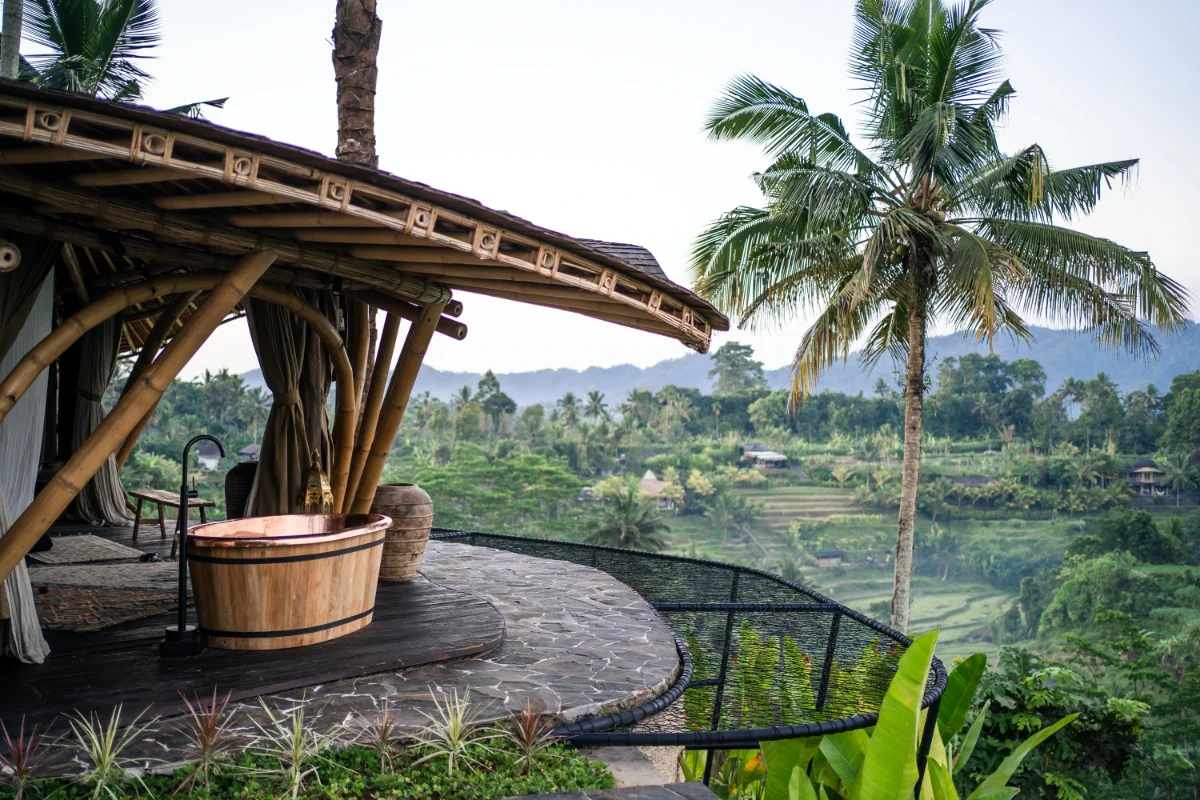 SantaiOn the edge of the hill, with 180-degree views and a heated jacuzzi on the terrace.
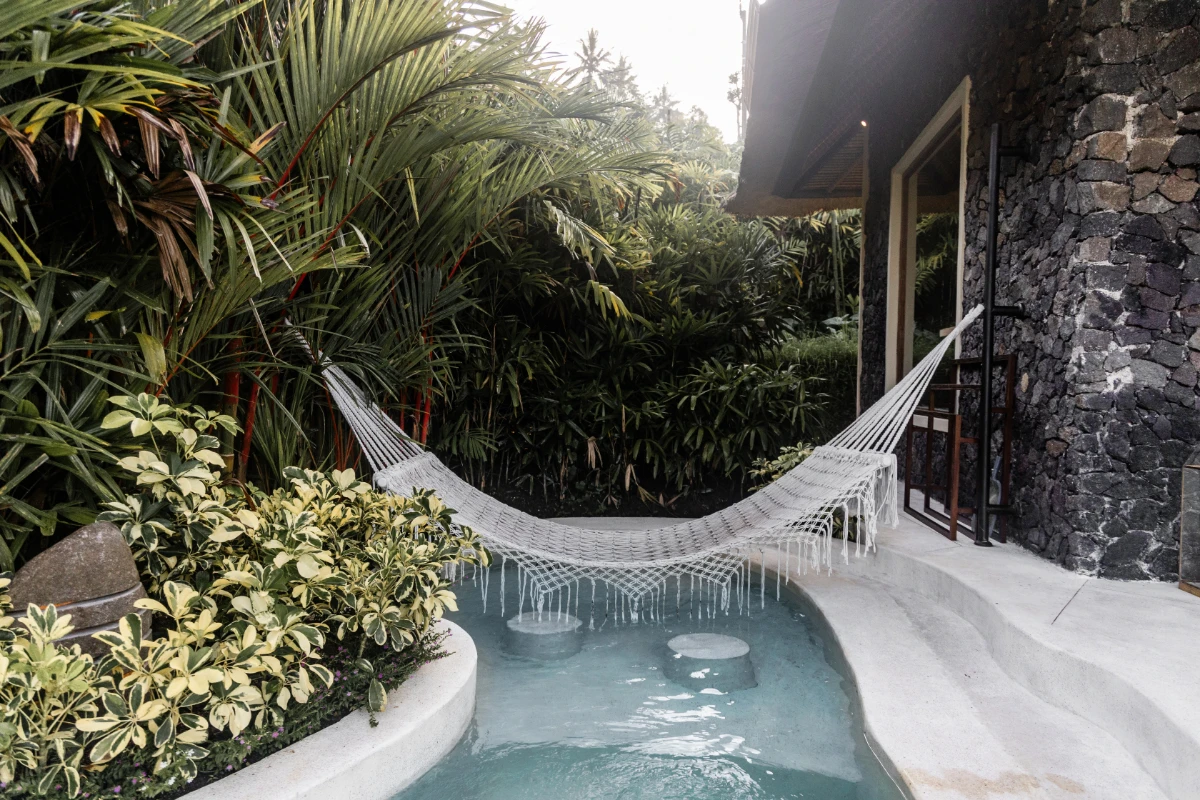 SayangA lava-stone hideaway for two, with the only private pool at Camaya.
 LotusA bamboo house with a net over the rice fields and a dome in the garden.
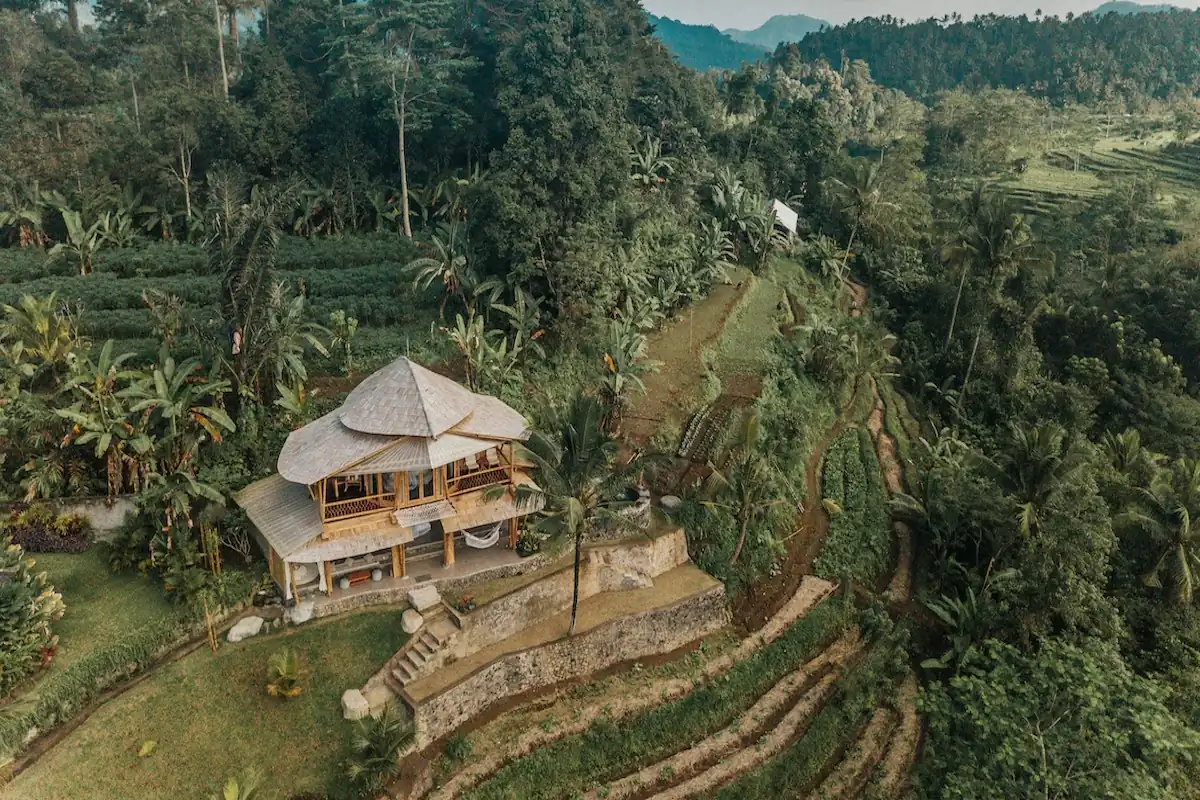 SuboyaWhere Camaya began: sunrise behind Mount Agung from the big net.
May, June and September. They're in the dry season, with sunny days and low rain, but have fewer visitors than July and August. April and October are good shoulder months.
February, March and November, the quietest months. February is the quietest of all. Avoid Christmas to New Year and July and August if you're on a budget.
From about November to March, and into April in the hills and the east. January is the wettest month. Rain usually comes in short, heavy showers in the afternoon or evening, not all day.
November, with average highs of about 32 °C. Bali is warm all year, with highs between 29 and 32 °C.
July and August, with highs of about 29 °C and lows of about 23 °C. Evenings in the hills, such as Ubud, Munduk and Kintamani, can be cool enough for a jumper.
July and August, and the fortnight around Christmas and New Year. In 2025, July had about 697,000 international visitors, against about 451,000 in February.
Yes, if you plan around the rain. Mornings are often dry, the rice fields are at their greenest, and prices and crowds are lower. It's not the best time for volcano treks, boat trips or west-coast beaches.
Avoid flying in or out on Nyepi (8 March 2027), when the airport closes for 24 hours. If you dislike crowds and high prices, avoid Christmas to New Year and July and August.
Dive from April to November, with the best visibility from August to November and mola mola from about July to October. Surf the west coast (Uluwatu, Canggu) from April to October, and the east coast (Sanur, Keramas) from November to March.
2026 cost guides put a week at about USD 350 to 550 per person on a budget, USD 700 to 1,400 mid-range, and USD 2,500 or more for luxury, excluding international flights. Rooms cost about 20 to 30% more in August than in February in the busiest areas.
Yes, all year, and more in the wet season. Dengue is spread by mosquitoes that bite in the daytime, so use repellent during the day as well as at night.
May to October for clear views of Mount Agung, and December to April for the greenest rice terraces and the fewest visitors. February and March are the quietest months.